


Gabion garden edging can be a practical way to define different areas of an outdoor space while adding natural stone and structure to the landscape. Instead of using a thin plastic strip or a conventional timber border, a gabion edge combines a wire mesh basket with stone to create a more substantial garden feature.
- What Is Gabion Garden Edging?
- Why Use Gabion Edging in a Garden?
- A Stronger Visual Boundary
- Natural Stone Adds Texture
- Suitable for Different Garden Styles
- It Can Help Define Practical Areas
- Where Can Gabion Garden Edging Be Used?
- Along Flower Beds
- Along Garden Paths
- Between Lawn and Planting
- Around Gravel Areas
- Around Raised Planting Areas
- How to Choose the Right Gabion Size
- Choosing Stone for Gabion Garden Edging
- What Type of Mesh Should Be Used?
- How to Prepare the Ground for Gabion Edging
- Gabion Edging and Drainage
- 7 Practical Gabion Garden Edging Ideas
- 1. Create a Clean Flower Bed Border
- 2. Frame a Gravel Path
- 3. Separate Lawn From a Garden Bed
- 4. Build a Border Around a Gravel Seating Area
- 5. Combine Gabions With Timber
- 6. Use Gabions to Divide Garden Zones
- 7. Follow a Gentle Slope
- How to Make Gabion Edging Look Natural
- Common Gabion Edging Mistakes to Avoid
- Using the Wrong Stone Size
- Ignoring the Scale of the Garden
- Choosing the Stone Only From a Photograph
- Forgetting About Path Width
- Assuming All Gabion Projects Are Simple
- Is Gabion Garden Edging Low Maintenance?
- Gabion Edging vs Traditional Garden Edging
- When Should You Use a Retaining Wall Instead?
- Final Thoughts
- Frequently Asked Questions
It can be used to separate a lawn from a flower bed, frame a garden path, contain loose gravel, or create a clear boundary around planting areas. The appearance can also be changed considerably by choosing different stone colors, mesh finishes, heights, and surrounding plants.
However, gabion edging is not suitable for every situation. A small decorative border is a relatively simple landscaping feature, while a gabion structure that needs to retain significant soil becomes a retaining-wall project with different design and stability considerations.
Understanding where gabion edging works best, how to plan it, and what materials to choose can help you create a border that looks good and performs its intended job.
What Is Gabion Garden Edging?
Gabion garden edging is a low gabion structure used as a boundary within a garden or landscaped area. The structure consists of a wire mesh basket or cage filled with stone.
Unlike a solid concrete or brick border, the stones remain visible through the mesh. This gives the edging a distinctive combination of metal and natural stone.
Depending on the design, gabion edging can be used to:
- Separate lawns and planting beds
- Define garden paths
- Frame flower beds
- Border gravel areas
- Create a transition between different landscaping materials
- Contain a small amount of soil
- Add structure to a modern or natural garden
The important consideration is the purpose of the edging. A decorative garden border does not necessarily need the same dimensions or engineering considerations as a retaining wall.
Why Use Gabion Edging in a Garden?
Gabions are often chosen because they can combine a practical boundary with a visible landscaping feature.
A Stronger Visual Boundary
A clear edge can make a garden easier to organize. Instead of having grass, gravel and planting areas gradually merge together, a gabion border creates a deliberate transition.
This can be particularly useful in larger gardens where different outdoor areas need to feel connected but still have their own defined spaces.
Natural Stone Adds Texture
The stone inside the basket becomes part of the garden design.
Rather than hiding the construction material, gabion edging makes it visible. A carefully selected stone can complement paving, walls, paths and planting around it.
Suitable for Different Garden Styles
Gabions can work in contemporary landscapes as well as more natural garden designs.
A clean-lined basket filled with evenly sized stone can create a modern appearance. More irregular natural stone combined with informal planting can produce a softer result.
It Can Help Define Practical Areas
Garden edging is not only decorative.
A border can help distinguish a walking route from a planting area, keep gravel within a defined space, and make the boundary between a lawn and flower bed easier to maintain.
Where Can Gabion Garden Edging Be Used?
One advantage of gabion edging is that it can be adapted to different parts of an outdoor space.
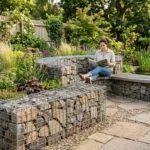
Along Flower Beds
A low gabion border can create a strong edge around a flower bed.
It separates the planting area from the lawn and provides a visible frame around flowers, shrubs, and ornamental grasses.
If the garden already contains natural stone elsewhere, using a similar stone in the gabion can make the overall design feel more consistent.
Along Garden Paths
Gabion edging can be used beside gravel or paved paths to create a clear boundary.
This can be particularly useful with loose gravel, where an edge helps define where the path finishes and the surrounding garden begins.
For narrow paths, however, the width of the edging needs to be considered carefully. A large border on both sides can reduce usable walking space.
Between Lawn and Planting
Grass can gradually spread into flower beds, while soil and mulch can move toward the lawn.
A clearly defined border can make the separation easier to manage.
A low gabion edge can provide this separation while also becoming part of the landscape rather than simply acting as an invisible boundary.
Around Gravel Areas
Gabion stone and gravel can work well together because both use natural aggregate as a visible design element.
A gabion edge around a gravel garden, seating area, or pathway can create a consistent material palette.
The key is to avoid using too many unrelated stone colors and textures in the same small area.
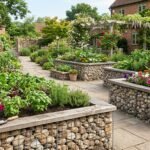
Around Raised Planting Areas
Gabions can also be incorporated into raised garden beds.
This can create a more substantial appearance than lightweight edging materials, but the amount of soil being retained matters.
If the structure is expected to hold back a significant depth of soil, it should be planned as a retaining structure rather than treated as ordinary decorative edging.
How to Choose the Right Gabion Size
There is no single gabion size that is correct for every garden.
The appropriate dimensions depend on what the structure is expected to do and how much space is available.
For decorative edging, a lower and narrower structure may be enough. Making the border unnecessarily large can take valuable space away from plants, paths, or lawn.
Before deciding on dimensions, consider:
- The width of the available space
- The height of the surrounding ground
- Whether soil needs to be retained
- The width of nearby paths
- The scale of the house and garden
- The size of the stones being used
- How the edging will interact with nearby planting
A useful approach is to decide what the border needs to accomplish first and then choose dimensions around that requirement.
Choosing Stone for Gabion Garden Edging
The stone is one of the most noticeable parts of a gabion, so it deserves as much attention as the basket itself.
The stone should be durable enough for outdoor conditions and appropriately sized for the mesh opening. If the fill is too small, pieces may escape through the mesh. If the stones are excessively large, filling the basket evenly can become more difficult.
Angular stone can also be useful because its irregular surfaces allow pieces to sit together more effectively.
Think About Appearance as Well
Stone color can change the entire appearance of a garden border.
Light-colored stone may work well with pale paving and bright planting, while darker stone can create stronger contrast against green lawns and foliage.
There is no universally “best” stone color. The right choice depends on the surrounding materials and the appearance you want to achieve.
It is worth looking at the stone in natural outdoor light before ordering a large quantity because photographs and indoor samples can make colors appear different.
What Type of Mesh Should Be Used?
The mesh needs to be appropriate for the application and compatible with the chosen stone.
Important factors include the wire diameter, mesh opening, protective coating, and overall construction of the gabion basket.
The mesh opening should be considered alongside the stone size. The fill needs to remain securely inside the basket rather than passing through the openings.
For outdoor projects, corrosion protection is also important. Galvanized wire and additional protective coatings are commonly used to improve resistance to weather and moisture.
When comparing gabion products, it is useful to look beyond the basket dimensions and check the actual wire specifications and coating information.
How to Prepare the Ground for Gabion Edging
Good preparation underneath the edging can make a significant difference to the finished result.
The ground should be reasonably stable and the planned line of the border should be established before the baskets are installed.
For a simple decorative edge, preparation may involve clearing vegetation, establishing a level base, and ensuring the surface can support the finished structure.
However, ground preparation becomes more important where the gabion will retain soil, sit on a slope, or be exposed to significant ground movement.
If the project involves substantial soil retention or difficult ground conditions, professional advice may be appropriate rather than relying on a decorative edging installation method.
Gabion Edging and Drainage
One reason gabions are useful in landscaping is their open construction.
Water can move through the spaces between the stones instead of being trapped behind a completely solid structure.
This does not mean drainage can be ignored.
The surrounding soil, slope, planting area, and any nearby structures still need to be considered. Poor site drainage can create problems regardless of the type of garden edging used.
If the gabion is being used as part of a retaining system, drainage becomes a more important design consideration because water pressure can affect the stability of the structure.
7 Practical Gabion Garden Edging Ideas
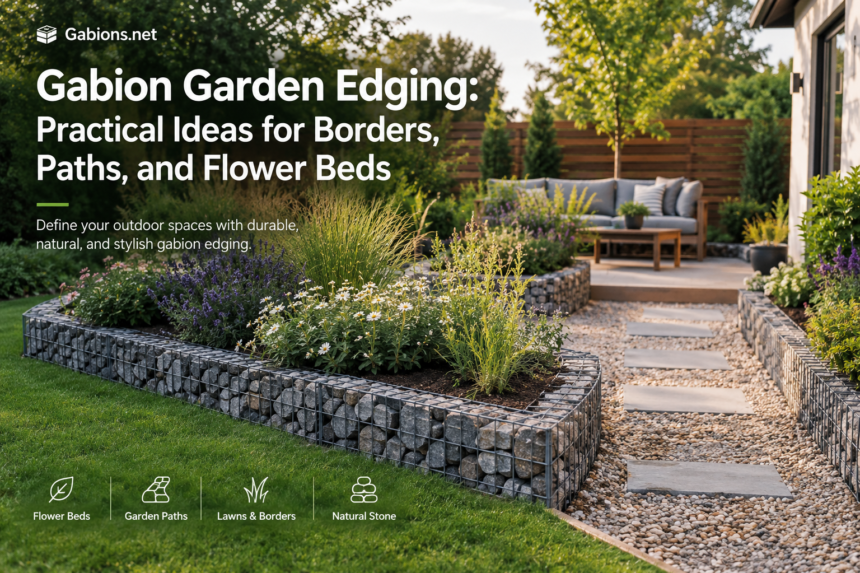
1. Create a Clean Flower Bed Border
Use a low gabion edge around a flower bed to create a defined boundary.
Keep the planting slightly informal around the edge so the hard stone structure does not dominate the garden.
2. Frame a Gravel Path
Place gabion edging along a gravel walkway to keep the path visually separate from surrounding planting.
This is particularly effective when the same or a complementary stone is used in other parts of the garden.
3. Separate Lawn From a Garden Bed
A gabion border can provide a clear transition between lawn and planting.
This can make the garden appear more organized and help establish a consistent mowing boundary.
4. Build a Border Around a Gravel Seating Area
A gabion edge can frame a small outdoor seating area, particularly when the seating area uses gravel or natural stone.
Plants can then be positioned outside the border to soften the transition.
5. Combine Gabions With Timber
Stone and timber can provide contrasting textures.
For example, a garden could combine a gabion border with timber seating or raised planting features. Keeping the number of materials controlled helps the design remain cohesive.
6. Use Gabions to Divide Garden Zones
Large gardens can sometimes benefit from visual separation.
A low gabion structure can help distinguish an entertaining area from a planting area, vegetable garden, or pathway without creating a tall wall.
7. Follow a Gentle Slope
Where the garden has a mild change in level, gabion edging can be arranged in sections that follow the landscape.
The design should not simply copy a level-ground installation if the slope introduces soil pressure or stability issues. Once the structure starts retaining substantial soil, it should be treated as a retaining-wall application.
How to Make Gabion Edging Look Natural
A gabion border can sometimes look overly hard if it is surrounded by bare paving and straight lines.
Plants can help balance the stone and wire.
Ornamental grasses, low-growing plants, ground covers, and flowering species can be positioned near the edge without completely hiding the gabion.
The goal is usually to let both elements contribute to the design.
It can also help to repeat the gabion stone elsewhere in the garden. For example, a similar stone could be used in a gravel path or another small landscape feature.
This creates a visual connection between different areas.
Common Gabion Edging Mistakes to Avoid
Using the Wrong Stone Size
The stone should be appropriate for the mesh opening. Very small pieces can fall through the basket, while excessively large pieces may leave awkward gaps.
Ignoring the Scale of the Garden
A large gabion can overwhelm a small garden.
The border should be proportional to the available space and the surrounding landscape.
Choosing the Stone Only From a Photograph
Stone can look very different depending on lighting and surroundings. If possible, view a sample outdoors before making a large purchase.
Forgetting About Path Width
Edging along both sides of a narrow path can reduce usable space.
Measure the finished width rather than only considering the size of the path before installation.
Assuming All Gabion Projects Are Simple
A decorative border is one thing. A structure retaining a significant amount of soil is another.
If the gabion is expected to resist substantial soil pressure or stabilize a slope, the project needs appropriate structural and drainage planning.
Is Gabion Garden Edging Low Maintenance?
Gabion edging can be relatively low maintenance because the stone does not need painting or staining in the way some timber products do.
Nevertheless, it should still be inspected occasionally.
Check the mesh for visible damage or corrosion, look for displaced stones, and watch for changes in the surrounding ground.
Vegetation should also be managed so that roots and uncontrolled growth do not create problems around the structure.
The expected maintenance will depend on the quality of the mesh, the environmental conditions, and how the edging has been installed.
Gabion Edging vs Traditional Garden Edging
Gabion is not automatically the best choice for every garden.
| Type of Edging | Advantages | Considerations |
|---|---|---|
| Gabion | Natural stone, strong visual presence, flexible design | Takes more space and requires stone |
| Timber | Warm and natural appearance | Can require more maintenance |
| Metal | Thin and clean appearance | Less substantial visually |
| Brick | Durable and architectural | More permanent appearance |
| Natural Stone | Traditional and natural look | Installation can be labor-intensive |
| Plastic | Lightweight and simple | Usually less visually substantial |
The right choice depends on the garden style, budget, available space, and the job the edging needs to perform.
Gabion makes particular sense when you want the border itself to become a visible landscaping feature.
When Should You Use a Retaining Wall Instead?
This distinction is important.
If the main purpose of the structure is to hold back a significant amount of soil, it should not simply be described as garden edging.
Retaining structures need to account for factors such as soil pressure, drainage, foundation conditions, wall dimensions, and site stability.
A small decorative gabion border may be a straightforward garden project. A tall gabion retaining wall on a slope can be a much more involved construction project.
When there is any doubt about the structural requirements, obtaining appropriate professional advice is safer than choosing dimensions based only on appearance.
Final Thoughts
Gabion garden edging can be a useful choice when you want a garden boundary that does more than simply separate two surfaces. It can define flower beds, frame paths, separate lawns from planting, contain gravel, and introduce natural stone into the landscape.
The most successful designs start with the practical purpose of the border rather than its appearance alone. Think about how much space is available, what the structure needs to contain, the type of stone you want, the surrounding planting, and how water will move through the area.
Most importantly, do not treat every gabion project as the same. A low decorative garden edge is very different from a structure that needs to retain substantial soil.
Choose the basket and stone for the job, prepare the ground carefully, and keep the design proportional to the garden. Done well, gabion edging can become a durable and attractive part of an outdoor space rather than simply another garden border.
Frequently Asked Questions
Is gabion garden edging suitable for a small garden?
It can be, provided the dimensions are kept proportional to the available space. A narrow, low border can define planting areas without taking too much room from the garden.
Can gabion edging be used around a lawn?
Yes. It can create a clear boundary between lawn and planting areas and can also help organize different landscape materials.
What is the best stone for gabion garden edging?
There is no single best stone for every project. Choose a durable stone that is appropriately sized for the mesh and suits the color and style of the surrounding garden.
Can gabion edging retain soil?
A low gabion edge can contain some soil, but its suitability depends on the amount of soil pressure involved. A structure designed to retain significant soil should be treated as a retaining wall rather than ordinary garden edging.
Does gabion edging need a foundation?
The required base depends on the size, purpose, ground conditions, and expected loads. Simple decorative edging may require relatively straightforward ground preparation, while larger or retaining applications require more careful foundation planning.
Does gabion edging rust?
The risk depends on the type and quality of wire and its protective coating, as well as the environmental conditions. Galvanized and coated gabion products are commonly used to improve corrosion resistance.
Can plants grow beside gabion edging?
Yes. Plants can be used to soften the appearance of the stone and integrate the structure into the wider landscape.