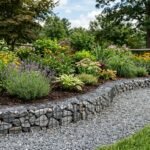



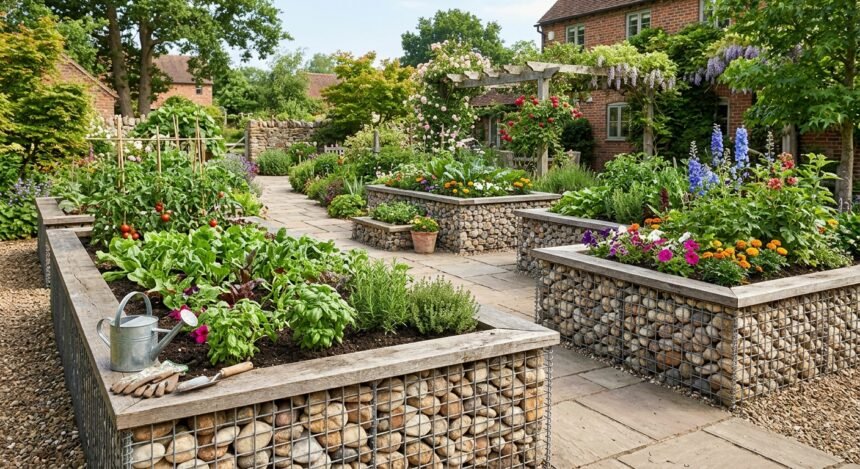
Raised garden beds can make a garden easier to organize while adding height, structure, and visual interest. Traditional timber, brick, and metal are common choices, but gabion baskets offer another option for gardeners who want a more natural stone appearance.
- What Is a Gabion Raised Garden Bed?
- Why Use Gabions for a Raised Garden Bed?
- How High Should a Gabion Raised Garden Bed Be?
- Choosing the Right Gabion Basket or Mesh
- Choosing Stone for a Gabion Raised Bed
- How to Prepare the Ground
- Do Gabion Raised Garden Beds Need Drainage?
- How to Fill a Gabion Raised Garden Bed
- What Soil Should Go Inside a Gabion Raised Bed?
- Gabion Raised Garden Bed Ideas
- 1. Vegetable and Herb Bed
- 2. Flower Bed
- 3. Herb Garden Near a Patio
- 4. Multiple Raised Beds
- 5. Gabion and Timber Combination
- 6. Ornamental Grasses and Structural Plants
- How to Make a Gabion Raised Bed Look Natural
- Common Mistakes to Avoid
- Making the Bed Too Wide
- Choosing Stone That Is Too Small
- Ignoring the Base
- Forgetting Drainage
- Choosing a Basket That Is Too Large
- Treating Every Project Like a Retaining Wall
- How Much Maintenance Does a Gabion Raised Garden Bed Need?
- Gabion vs Timber Raised Garden Beds
- Are Gabion Raised Garden Beds Good for Small Gardens?
- When Is a Gabion Raised Bed Not the Best Choice?
- Final Thoughts
- Frequently Asked Questions
A gabion raised garden bed uses a wire-mesh basket or cage filled with suitable stone to create the sides of the bed. Soil and planting material are then placed within the central growing area. The result combines the texture of natural stone with the practical layout of a raised bed.
However, gabion raised beds need more planning than simply filling a basket with rocks. The size of the structure, mesh, stone, base, drainage, soil depth, and planting requirements all need to work together.
What Is a Gabion Raised Garden Bed?
A gabion raised garden bed is a planting bed built with gabion baskets or mesh panels filled with stone. The gabion structure forms the outer walls, while the space inside is used for soil and plants.
Unlike a conventional gabion wall, the main purpose of a raised garden bed is usually to create a defined growing area rather than retain a large quantity of soil on a slope.
The design can be relatively simple for a small decorative bed, while larger or taller structures may require more careful consideration of stability and ground conditions.
Why Use Gabions for a Raised Garden Bed?
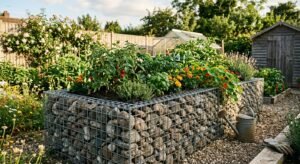
Gabions can give a garden bed a distinctive appearance because the stone remains visible rather than being hidden behind another material.
A Natural Stone Appearance
The combination of wire mesh and stone works particularly well in gardens that already use gravel, stone paths, retaining features, or other natural materials.
Different stone colors and sizes can also change the overall appearance of the bed.
Strong Visual Structure
A raised bed creates a clear boundary between planting areas and surrounding lawn, paths, or patios. Gabion sides make that boundary more visually substantial.
Flexible Garden Design
Gabion beds can be used for vegetables, herbs, flowers, ornamental grasses, and other suitable plants. They can also be incorporated into larger landscape designs.
Long-Term Outdoor Use
Properly selected and protected gabion components can be suitable for outdoor conditions. The expected service life will depend on the quality of the wire, coating, stone, installation, and local environment.
How High Should a Gabion Raised Garden Bed Be?
There is no single ideal height for every garden.
The right height depends on what you are growing, how easily you want to access the plants, available space, and how much soil the structure needs to contain.
A low raised bed may be enough to create a visual border and slightly improve planting conditions. A taller bed can make planting and maintenance more comfortable, but it also places greater demands on the structure and the ground beneath it.
For larger or unusually tall designs, it is important to consider soil pressure and overall stability rather than treating the project as simple decorative edging.
Choosing the Right Gabion Basket or Mesh
The basket is one of the most important parts of the project because it has to contain the stone while maintaining the shape of the garden bed.
Consider the following before buying:
- Wire diameter
- Mesh opening size
- Protective coating
- Basket dimensions
- Connection and bracing system
- Compatibility with the chosen stone
The mesh opening should be appropriate for the size of the stone being used. If the stones are too small for the mesh, they may move through the openings or create an untidy appearance.
For outdoor garden projects, corrosion protection is also important. Galvanized or appropriately coated wire can provide better resistance to outdoor exposure than untreated steel.
Choosing Stone for a Gabion Raised Bed
Stone is not only structural. It is also one of the most visible parts of the finished garden bed.
Angular stones are often useful because they can lock together reasonably well inside the basket. The stone should also be compatible with the mesh opening.
When choosing the material, think about:
Color: Choose a color that works with the surrounding plants, paving, walls, and other garden materials.
Size: Stone should be large enough to remain securely inside the basket.
Shape: A mixture of suitable angular stones can produce a natural appearance while helping the fill remain stable.
Availability: Locally available stone may be more practical and economical than a specialist decorative material.
It is a good idea to look at a physical sample where possible because photographs can make stone colors appear very different from their real outdoor appearance.
How to Prepare the Ground
A stable base is important before installing a gabion raised garden bed.
Start by marking the exact footprint of the bed. Remove grass, roots, loose organic material, and other debris from the area.
The ground should then be checked for level and stability. Small decorative beds on firm ground may require relatively straightforward preparation, while larger structures may need a more substantial base.
Avoid placing a heavy gabion structure directly on soft, unstable, or poorly compacted ground without addressing the underlying problem.
The better the base, the easier it is to keep the baskets aligned and the finished garden bed looking neat.
Do Gabion Raised Garden Beds Need Drainage?
Drainage should be considered during the design rather than after construction.
A raised bed needs to allow excess water to move away from the growing area. Poor drainage can leave plant roots sitting in saturated soil, which can create problems for many types of plants.
The surrounding ground conditions also matter. If the garden bed is positioned on compacted soil, clay, a paved surface, or another area where water cannot drain easily, additional drainage planning may be necessary.
The gabion sides themselves are open to water movement, but that does not automatically solve every drainage problem inside the planting area.
How to Fill a Gabion Raised Garden Bed
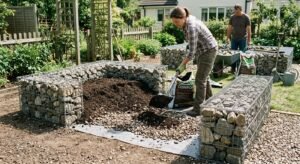
Once the gabion structure is properly positioned and secured, the stone can be placed inside the baskets.
The stones should be arranged so that visible faces produce a reasonably consistent appearance while smaller suitable pieces can be used carefully within the fill where appropriate.
Avoid randomly throwing large quantities of stone into the baskets without checking the shape and alignment of the structure.
For a raised garden bed, it is also important to keep the planting area properly defined so that the soil does not gradually spill into the stone fill.
What Soil Should Go Inside a Gabion Raised Bed?
The soil mixture should be selected according to the plants you intend to grow.
A vegetable and herb bed may have different requirements from an ornamental flower bed. Consider the drainage, moisture retention, organic matter, and nutrient requirements of the plants before filling the bed.
Do not simply use the same soil throughout every garden project. A raised bed gives you an opportunity to create a growing medium that better suits the plants you want to grow.
The final soil level should also be planned carefully. Leaving a small amount of space below the top of the bed can help reduce soil washing over the edge during heavy rain or watering.
Gabion Raised Garden Bed Ideas
1. Vegetable and Herb Bed
A gabion border can create a defined vegetable or herb-growing area while giving the garden a strong architectural edge.
Keep the bed width manageable so you can reach the plants without regularly stepping into the growing area.
2. Flower Bed
Gabions work particularly well around colorful perennial planting. The neutral appearance of many natural stones can provide contrast against flowers and foliage.
3. Herb Garden Near a Patio
A smaller gabion bed positioned near an outdoor seating area can create a practical herb garden while also functioning as a landscape feature.
4. Multiple Raised Beds
Several smaller beds can be arranged with paths between them. This can work well in larger gardens where the raised beds need to form part of the overall landscape layout.
5. Gabion and Timber Combination
Stone-filled gabions can be combined with timber elements to create a softer garden appearance. The contrast between wood and stone can work particularly well in informal outdoor spaces.
6. Ornamental Grasses and Structural Plants
Gabion beds do not have to be limited to traditional flowers or vegetables. Ornamental grasses and other structural plants can create an attractive contrast against the rough texture of stone.
How to Make a Gabion Raised Bed Look Natural
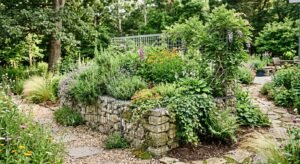
A gabion raised bed can sometimes look too heavy if the surrounding garden is small or heavily planted.
One way to improve the balance is to soften the structure with planting around its edges. Low-growing plants, grasses, ground cover, or nearby shrubs can help integrate the stone into the wider garden.
Repeating the same stone elsewhere can also make the design feel intentional. For example, matching stone could be used in a nearby path, small border, or decorative feature.
The goal is not necessarily to hide the gabion. Instead, the planting and surrounding materials should make it feel like part of the garden.
Common Mistakes to Avoid
Making the Bed Too Wide
A very wide bed can make the center difficult to reach. Consider how you will plant, water, weed, and harvest before finalizing the dimensions.
Choosing Stone That Is Too Small
Small stones may not work correctly with larger mesh openings and can create problems with containment.
Ignoring the Base
A heavy stone-filled structure can shift if it is installed on unsuitable ground. Ground preparation should match the size and weight of the project.
Forgetting Drainage
Beautiful stonework will not compensate for a planting area that remains waterlogged.
Choosing a Basket That Is Too Large
Large gabion structures can dominate a small garden. The scale should match the available space and surrounding features.
Treating Every Project Like a Retaining Wall
A decorative raised bed is not automatically equivalent to a structural retaining wall. If the design is tall, supports significant soil, sits on a slope, or is close to a property or other structure, more detailed engineering and professional advice may be appropriate.
How Much Maintenance Does a Gabion Raised Garden Bed Need?
One advantage of a stone-filled structure is that the gabion itself generally does not require the same type of routine treatment as materials such as untreated timber.
However, it should still be inspected occasionally.
Check the mesh for visible damage or corrosion, look for displaced stones, and make sure the structure remains stable. The surrounding soil and plants also need normal garden maintenance.
Vegetation should not be allowed to grow into places where it could damage or significantly interfere with the gabion structure.
Gabion vs Timber Raised Garden Beds
| Feature | Gabion | Timber |
|---|---|---|
| Appearance | Natural stone and metal | Warm and natural |
| Durability | Depends on mesh, coating, stone, and installation | Depends heavily on timber type and treatment |
| Maintenance | Generally low for the structure | May require treatment or replacement |
| Weight | Heavy | Relatively lightweight |
| Design style | Strong, textured, architectural | Softer and more traditional |
| Installation | Requires stone and careful assembly | Usually simpler |
| Space | Can require substantial wall thickness | Often uses less space |
Neither option is automatically better for every garden. The best choice depends on the available space, desired appearance, budget, materials, and expected lifespan.
Are Gabion Raised Garden Beds Good for Small Gardens?
They can work in small gardens, but scale becomes especially important.
A thick stone-filled wall can consume valuable space when the garden itself is limited. In a compact area, a smaller gabion profile or a combination of gabion sections with other materials may be more practical.
Before construction, mark the proposed dimensions on the ground and check the remaining space for paths, planting, seating, and access.
When Is a Gabion Raised Bed Not the Best Choice?
Gabions are not suitable for every garden.
If the main goal is simply to create a very thin planting border, another edging material may use space more efficiently. Similarly, a lightweight temporary raised bed may not justify the weight and stone requirements of a gabion structure.
For significant soil retention, steep slopes, high structures, or projects close to buildings and property boundaries, the project should be assessed as a structural installation rather than an ordinary garden bed.
Final Thoughts
Gabion raised garden beds can combine practical planting space with the distinctive appearance of natural stone. They work particularly well when the garden already includes gravel, stone paths, gabion features, or other hard landscaping.
The most important part is not simply choosing attractive stone. The basket dimensions, mesh, base preparation, drainage, soil, and planting area all need to be considered together.
For a small decorative bed, the project may be relatively straightforward. Larger or taller structures require greater attention to ground conditions, stability, drainage, and soil pressure.
Start with the purpose of the bed, plan the dimensions around how the garden will actually be used, and choose the gabion system and stone accordingly. A well-planned raised bed can then become both a useful growing space and a strong landscape feature.
Frequently Asked Questions
Can I grow vegetables in a gabion raised garden bed?
Yes. Gabion sides can be used around a growing area for vegetables and herbs, provided the internal soil depth, drainage, and growing conditions are suitable for the chosen plants.
Do gabion raised beds need a concrete foundation?
Not every small garden bed requires the same foundation. The appropriate base depends on the size, weight, ground conditions, and purpose of the structure. Larger or more demanding installations may require more substantial preparation.
What is the best stone for a gabion raised garden bed?
There is no single best stone for every project. Choose durable stone that is appropriately sized for the mesh and suits the appearance of the surrounding garden.
Can gabion raised beds be used on a slope?
They can be used in some sloped gardens, but the design becomes more complex when the structure must retain soil or manage changes in elevation. Stability and drainage should be considered carefully.
Do gabion raised beds get hot?
Stone can become warm when exposed to strong sunlight. The effect on plants depends on the climate, bed orientation, stone type, planting, and soil conditions. Plants should be selected according to the local growing environment.
Can I combine gabions with other garden materials?
Yes. Gabions can be combined with timber, paving, gravel, natural stone, concrete, and planting to create different landscape styles.