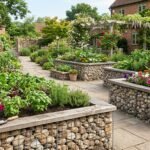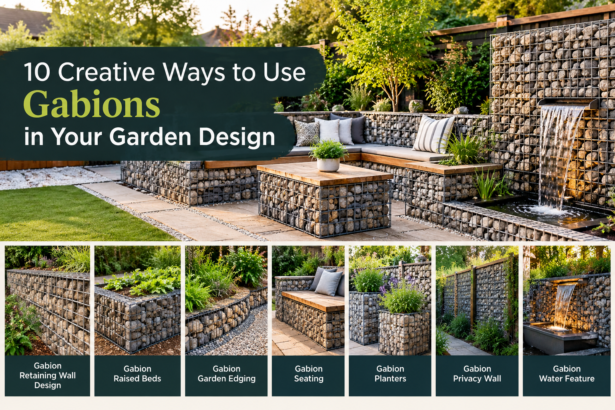



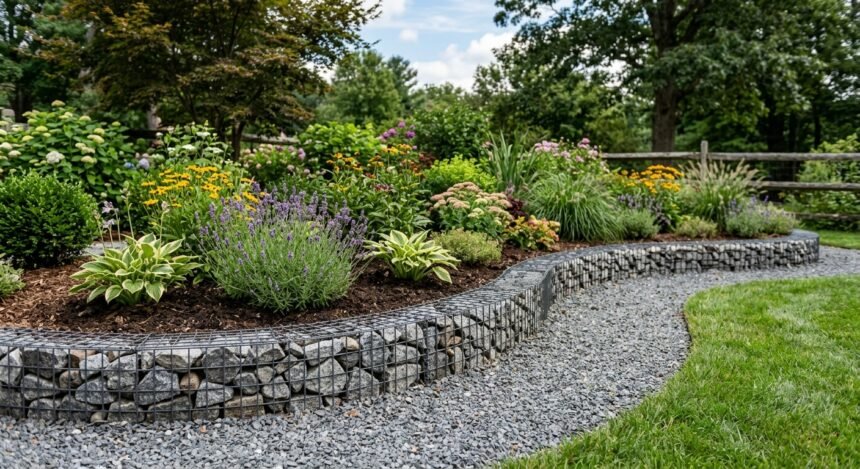
Gabion wall garden edging is a practical way to define garden borders while adding a natural, structured feature to an outdoor space. Instead of using timber, plastic, concrete, or traditional masonry, gabion edging uses wire baskets filled with stone to create a strong and visually distinctive boundary.
- What Is Gabion Wall Garden Edging?
- Why Use Gabions for Garden Edging?
- Where Can Gabion Garden Edging Be Used?
- Choosing the Right Stones
- Selecting Gabion Baskets
- How to Install Gabion Wall Garden Edging
- 1. Mark the Garden Edge
- 2. Prepare the Ground
- 3. Assemble the Baskets
- 4. Add the Stone
- 5. Check the Structure
- Gabion Edging for Modern Gardens
- Gabion Edging for Natural and Rustic Gardens
- How to Combine Gabions With Other Edging Materials
- Maintenance Requirements
- Common Mistakes to Avoid
- Are Gabion Walls Good for Garden Edging?
- Final Thoughts
- Frequently Asked Questions
Gabions work especially well around flower beds, pathways, lawns, vegetable gardens, and areas with different levels. Their open stone-filled construction gives the edging a natural appearance while also making it durable and suitable for a wide range of garden styles.
What Is Gabion Wall Garden Edging?
Gabion wall garden edging is a low boundary made from wire mesh baskets filled with stones or other suitable materials. The baskets are usually positioned along the edge of a garden area, path, lawn, or planting bed.
Unlike a conventional solid wall, a gabion structure allows the stone fill to remain visible through the mesh. This creates a textured appearance that can complement both traditional and contemporary gardens.
The size of the edging can vary depending on its purpose. A narrow, low gabion border may simply separate a lawn from a flower bed, while a wider structure can provide a more substantial garden boundary.
Why Use Gabions for Garden Edging?
One of the main advantages of gabion edging is its combination of function and appearance. It can clearly define different parts of a garden without looking overly artificial.
Gabion walls also provide considerable flexibility. Different stone colors, sizes, and shapes can change the character of the finished edging. Light-colored stone can create a clean appearance, while darker or mixed stone can produce a more rustic effect.
Another benefit is durability. Properly installed gabion baskets can withstand outdoor conditions and do not have the same problems with rotting that can affect untreated timber edging.
Where Can Gabion Garden Edging Be Used?
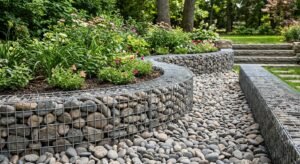
Gabion edging can be adapted to many parts of a landscape.
Flower Beds
A low gabion border can create a clear separation between planting areas and surrounding lawn or paving. The stone texture also provides an attractive contrast with flowers and green foliage.
Garden Paths
Gabion edging can be used along both sides of a pathway to establish a defined route through the garden. It works particularly well with gravel, paving slabs, or natural stone paths.
Vegetable Gardens
Raised or ground-level vegetable beds can benefit from a durable edge that helps keep soil and mulch within the planting area.
Lawn Borders
A gabion border can create a clean transition between grass and planting beds. The physical boundary may also make regular lawn maintenance easier because the edge is clearly defined.
Sloping Gardens
In gardens with changes in elevation, gabions can provide a practical way to establish boundaries between different areas. However, taller structures may require more careful planning and potentially professional advice.
Choosing the Right Stones
Stone is one of the most noticeable parts of a gabion garden edge, so the choice of fill can have a major effect on the finished appearance.
Natural stone is commonly chosen because it provides a durable and understated look. The stone should be appropriately sized for the mesh openings so that it remains securely inside the basket.
When choosing the fill, consider the existing materials around the garden. Stone that complements nearby paving, walls, paths, or buildings will usually create a more cohesive landscape.
It is also worth considering how the stone will look when wet and dry. Some natural stones change considerably in color after rainfall.
Selecting Gabion Baskets
Gabion baskets should be suitable for outdoor use and appropriate for the size and location of the edging.
The mesh needs to be strong enough to contain the selected stone. The dimensions of the basket should also suit the available space. A very deep basket may be unnecessary for a simple garden border, while a wider structure may be useful where additional stability is required.
For visible garden projects, the finish of the wire is another consideration. Galvanized wire is commonly used because it is designed to resist corrosion in outdoor environments.
How to Install Gabion Wall Garden Edging
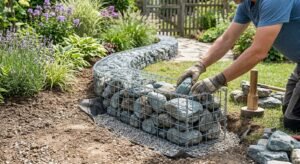
The installation process depends on the size and purpose of the project, but basic preparation is important even for a relatively small border.
1. Mark the Garden Edge
Start by marking the exact line where the gabion edging will be installed. A string line can help maintain a straight boundary, while a garden hose can be useful for planning curved edges.
2. Prepare the Ground
Remove grass, roots, loose soil, and other material from the installation area. The ground should be reasonably firm and level before placing the baskets.
For larger or heavier structures, the foundation requirements can be more demanding. The ground conditions and proposed wall height should be considered before construction begins.
3. Assemble the Baskets
Follow the basket manufacturer’s instructions when assembling the mesh panels. Make sure the panels are properly connected and that the structure is positioned correctly before filling it.
4. Add the Stone
Place the stone carefully into the basket rather than simply dumping large quantities into one location. Larger visible stones can be positioned toward the outside faces, with suitable smaller material used toward the center where appropriate.
Avoid creating large empty spaces inside the basket. Even filling helps the finished gabion maintain its shape.
5. Check the Structure
As the basket is filled, regularly check that the sides remain aligned and that the mesh is not being pushed outward excessively.
Once the basket is completely filled and securely closed, inspect the edging to make sure it follows the planned garden line.
Gabion Edging for Modern Gardens
Gabions do not have to look rustic. With carefully selected stone and a simple garden layout, they can work very well in contemporary landscapes.
A straight gabion border filled with uniform stone can create a clean architectural line around a lawn or planting bed. Combining it with concrete paving, simple planting, or gravel can produce a modern appearance without requiring a completely solid wall.
For a softer look, plants can be allowed to grow close to the stone structure. This helps integrate the gabion into the surrounding landscape.
Gabion Edging for Natural and Rustic Gardens
Gabions are equally suitable for informal garden designs.
Irregular natural stone, curved borders, mixed planting, and gravel paths can make the structure feel like a natural part of the landscape. Plants around the base can soften the transition between the wire basket and the garden.
Using locally appropriate stone can also help the edging relate more naturally to the surrounding environment.
How to Combine Gabions With Other Edging Materials
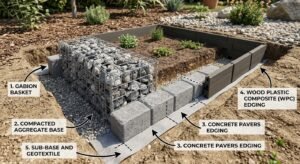
Gabions can be used alongside other landscape materials rather than covering an entire garden boundary.
For example, a garden could combine gabion edging with timber, natural stone paving, gravel, or concrete. This can create visual separation between different garden areas while preventing the design from becoming repetitive.
The key is to repeat materials thoughtfully. If the same stone appears in a path and gabion border, the two elements can feel connected even when they serve different purposes.
Maintenance Requirements
One reason gardeners choose gabions is that they generally require relatively little routine maintenance once properly installed.
The main tasks involve checking the baskets periodically for damage, keeping vegetation from causing problems around the structure, and removing unwanted debris that may accumulate between stones.
Over time, individual stones may settle. Small adjustments may occasionally be necessary if the appearance or shape of the edging changes significantly.
The wire should also be inspected for signs of corrosion or physical damage, particularly in environments with demanding weather conditions.
Common Mistakes to Avoid
Poor ground preparation is one of the most important problems to avoid. Installing a heavy gabion structure on unstable or poorly prepared ground can create movement or settlement.
Another common mistake is choosing stone that is too small for the mesh openings. The fill should be compatible with the basket so that stones remain securely contained.
It is also important not to treat every gabion project as if it were identical. A low decorative garden edge has different structural requirements from a tall retaining wall.
For larger walls, structures retaining soil, or projects on significant slopes, appropriate engineering and local construction requirements should be considered.
Are Gabion Walls Good for Garden Edging?
Yes, gabions can be an effective option for garden edging when the basket, stone, and foundation are appropriate for the project.
They provide a durable visual boundary, offer many design possibilities, and can work with both modern and natural garden styles. Their main appeal is that the edging becomes a landscape feature rather than simply a hidden border.
However, the best solution depends on the garden layout, soil conditions, wall dimensions, drainage needs, and the desired appearance.
Final Thoughts
Gabion wall garden edging offers a practical alternative to conventional garden borders. Its combination of wire mesh and natural stone creates a strong visual boundary that can separate lawns, flower beds, paths, vegetable gardens, and other outdoor areas.
The most successful projects start with careful planning. Choose a suitable basket, select stone that works with the surrounding landscape, prepare the ground properly, and make sure the structure is appropriate for its intended purpose.
When these details are considered from the beginning, gabion edging can become a durable and attractive part of the garden rather than simply another type of border.
Frequently Asked Questions
How deep should gabion garden edging be?
There is no single depth that works for every project. A simple decorative border can be relatively shallow, while structures that need to provide greater stability may require substantially more depth. The intended function and ground conditions should determine the dimensions.
What stone is best for gabion garden edging?
Durable natural stone that is appropriately sized for the mesh is a common choice. The best option also depends on the desired appearance and the materials already used in the garden.
Can gabions be used around raised garden beds?
Yes. Gabion baskets can create attractive sides for raised planting areas, provided the design is appropriate for the height, soil pressure, drainage, and site conditions.
Do gabion garden edges need foundations?
The requirements depend on the size and purpose of the structure. Small decorative edging may require simpler ground preparation, while larger or load-bearing structures need a more carefully designed base.
Are gabions suitable for curved garden borders?
Yes. Gabion systems can be arranged to follow curves, although tighter curves may require careful planning and suitable basket dimensions.