


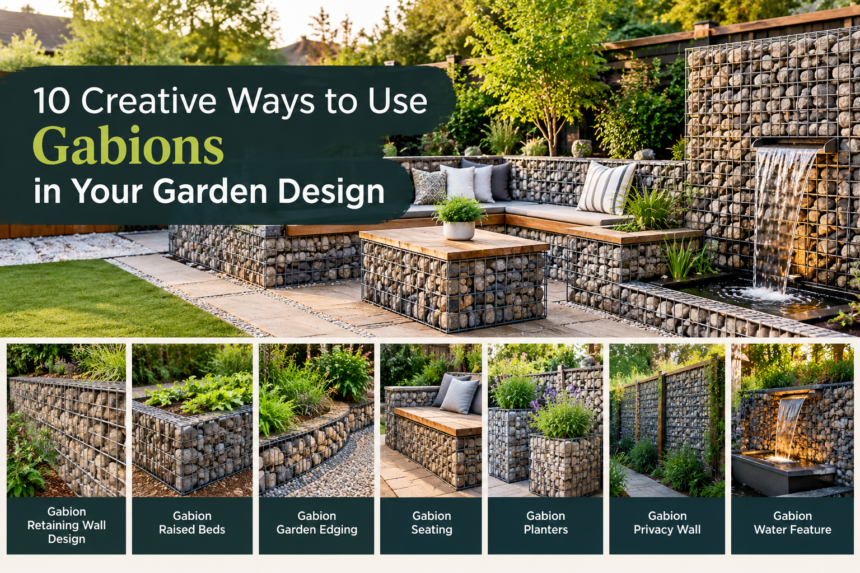
Gabions are wire mesh baskets filled with stone, and in a garden they can become planters, benches, edging, screens and even water features. The best gabion garden ideas are usually the simple ones: sturdy, low features where the stone fill is the main attraction. This guide walks through ten ways to use gabions in garden landscaping, roughly from easiest to most demanding, and flags where a project needs professional advice before you start.
- Decorative, freestanding or retaining? Decide this first
- 1. Gabion garden edging
- 2. Gabion planters
- 3. Gabion raised beds
- 4. Gabion seating and outdoor seating
- 5. A gabion privacy wall
- 6. Terraces for a sloping garden
- 7. A gabion water feature
- 8. Freestanding walls and garden room dividers
- 9. Bases for patios and outdoor kitchens
- 10. Wildlife and habitat features
- Choosing stone and mesh
- Common mistakes to avoid
- Final thoughts: where to start
- FAQs
Decorative, freestanding or retaining? Decide this first
The type of project matters more than the style you choose.
- Decorative features such as planters, edging and low seating carry very little load. They are the most forgiving.
- Freestanding walls, such as a privacy screen, hold nothing back, but they must resist wind and stay stable.
- Retaining walls hold back soil. The soil pushes against the wall, and water trapped behind it pushes even harder.
Gabion retaining wall design depends on the soil, the slope, drainage and what sits above or beside the wall. There is no universal foundation depth or safe height. If a wall holds back soil, supports a path or structure, or could affect a neighbour’s land, have it assessed by a qualified local professional. Rules on wall height and boundaries also vary by area, so check them before you buy anything.
1. Gabion garden edging
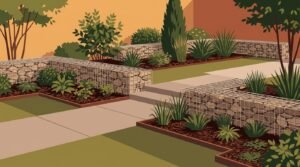
Gabion garden edging is the easiest place to start. A slim row of stone-filled baskets can separate a lawn from a border, line a gravel path or keep mulch in place. It holds very little, so it does not need the engineering of a taller structure.
The ground still matters. Even a low run looks untidy if the base settles unevenly, so level and firm the soil before setting the first basket.
2. Gabion planters

Gabion planters give you a structured, stone-clad container that suits both modern and naturalistic gardens. The usual method is to build the wire mesh baskets, line the inside so soil stays in, and fill the centre with planting mix instead of stone. The stone fill goes around the outside as a decorative layer.
Match the plants to the conditions. Grasses, thyme and sedums cope well with free-draining, sun-warmed stone. Thirstier plants need more watering because moisture escapes through the mesh.
3. Gabion raised beds

Gabion raised beds work like planters at a larger scale. Beside a patio or along a vegetable patch, they give a solid, permanent look that timber often cannot match.
Height is where you need care. A low bed is essentially a big planter. A tall bed holds a heavy weight of wet soil and starts to behave like a small retaining wall, which makes it a structural question rather than a design one. Line the bed so soil does not wash out through the stone, and make sure water can drain instead of collecting behind the mesh.
4. Gabion seating and outdoor seating

Gabion seating uses a stone-filled basket as the base of a bench. Add a timber or stone slab top and you have durable outdoor seating that needs little upkeep. Long benches work well around a fire area or beside a patio, and a bench with a hollow section can double as log storage.
Comfort depends on the top surface. Bare stone gets hot in sun and cold in shade, so plan a timber, slab or cushioned cap from the start. Use stone without sharp edges near the seat.
5. A gabion privacy wall

A gabion privacy wall can screen a seating area, hide bins or a shed, or soften a view of a busy road. The mass of stone absorbs some sound, though it will not silence a noisy neighbour.
This is a freestanding wall, so a tall, solid structure in an exposed spot has to cope with wind and must be firmly connected and stable. Check local height limits, especially near a boundary, and get a tall design assessed by a qualified professional. Gaps or a staggered layout can reduce wind pressure while still blocking sight lines.
6. Terraces for a sloping garden
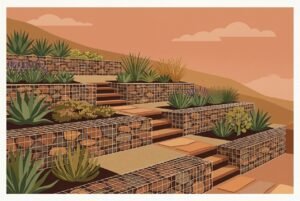
A slope can make a garden hard to use, and stepped gabion terraces are a popular way to create flat levels. Each step holds back soil, so this is retaining wall territory again.
Drainage, soil type, slope angle and the loads above each terrace all shape the design. Do not work it out from a magazine photo. Bring in a qualified local professional for the gabion retaining wall design, and enjoy the finished terraces as the reward.
7. A gabion water feature

A gabion water feature can be as simple as a stone-filled basket over a hidden reservoir, with water bubbling up through the stone. The water is recirculated, so it uses little, and the stone and mesh catch light and sound attractively.
Water and electricity need careful handling. Use a qualified electrician for anything connected to mains power. Also plan how you will top up the water, clean the reservoir and keep leaves out.
8. Freestanding walls and garden room dividers
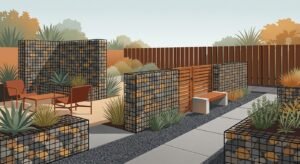
A low freestanding wall can divide a garden into “rooms”, for example separating a dining area from a vegetable patch. It holds nothing back, so a modest height can be a manageable project.
Stone choice does much of the work in gabion wall garden design. Warm sandstone, cool grey slate and rounded river stones each create a different mood. Try to match the stone to your house or paving so the wall looks like it belongs.
9. Bases for patios and outdoor kitchens
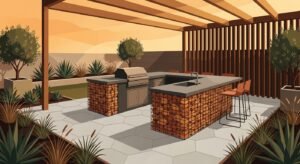
Gabion bases can support a countertop for an outdoor kitchen, frame a fire feature or act as a plinth for a large pot or sculpture. The rugged stone pairs well with timber and metal.
Think about heat and weight. Keep combustible materials clear of anything hot, follow appliance instructions, and make sure the base is designed for the load it will carry.
10. Wildlife and habitat features
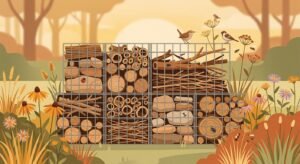
The gaps in stone fill give insects and small creatures places to shelter. A basket in a quiet corner, partly filled with stone, bark and other natural materials, can become a small habitat feature, especially with plants growing over it.
Treat it as an addition to planting, not a replacement. It works best where the garden already provides food and cover.
Choosing stone and mesh
- Stone: Pick hard, durable stone suited to your climate, especially if you get frost. It should be larger than the mesh openings so it cannot slip out.
- Mesh: Wire mesh baskets vary in wire thickness and coating. Ask suppliers about corrosion protection and what each product is designed for.
- Look: Angular crushed stone gives a crisp, modern face, while rounded stone looks softer. Check a sample before ordering a full load.
- Base: Stable, level ground supports every project on this list.
Common mistakes to avoid
Treating a retaining wall as decoration. If it holds back soil, the rules change. Get it assessed.
Ignoring drainage. Water collecting behind or under a structure can cause movement, particularly in raised beds and terraces.
Skipping the base. Poorly prepared ground leads to settling, bulging and gaps.
Choosing stone from a photo alone. Colour and size look different in a real garden.
Forgetting the neighbours. A tall wall or terrace near a boundary can raise legal and safety issues, so check local requirements first.
Final thoughts: where to start
If you are new to gabions, begin with a low decorative feature such as edging, a planter or a small bench. It will show you how the baskets, stone and ground behave before you take on something bigger. If your garden slopes, or you want a tall wall or a raised bed of real height, have a qualified local professional look at the site before you buy materials.
Gabions reward good planning. With suitable stone fill, a stable base and a design matched to the job, they can give a garden structure that lasts for years.
FAQs
Do I need permission to build a gabion wall in my garden?
It depends on where you live, and on the height, position and purpose of the wall. Boundary walls and retaining walls are more likely to be regulated than a low planter or edging. Check with your local authority before you build.
Can plants grow in gabions?
Yes, but not in plain stone fill. For planters and raised beds, you line the basket and fill the centre with soil or planting mix. Some plants will also root into gaps in the stone over time, but do not count on it.
How long do gabions last in a garden?
It depends on the mesh coating, the stone and the local environment, for example damp or coastal air. Ask your supplier about the corrosion protection of the wire mesh baskets you plan to buy.
Can I build gabion garden features myself?
Low, decorative projects such as edging, planters and small benches are realistic for many DIYers. Anything that holds back soil, is tall, or carries a load should be designed or checked by a qualified professional.