


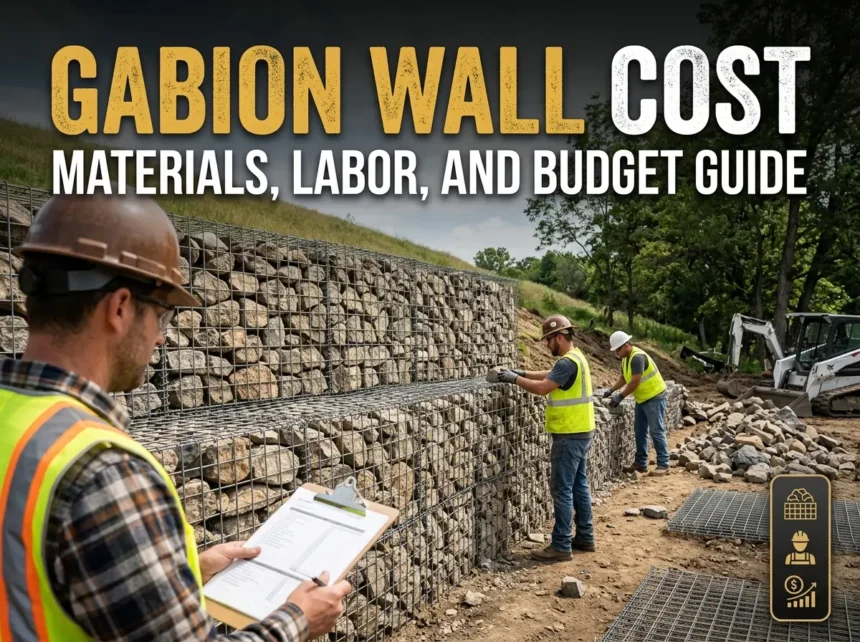
The baskets are only one part of a gabion wall’s cost. Stone, delivery, ground preparation, and the work involved in filling the cages can change the final bill considerably.
- How Much Does a Gabion Wall Cost?
- What Makes Up the Cost?
- Calculate the Wall Volume Before Pricing Stone
- A Sample Gabion Wall Budget
- Why Wall Depth Changes the Price
- Decorative Walls and Retaining Walls Need Different Budgets
- Is Building a Gabion Wall Yourself Cheaper?
- Practical Ways to Reduce Gabion Wall Cost
- Ask About Standard Basket Sizes
- Compare Local Stone Options
- Keep the Layout Simple
- Plan the Delivery Point
- Specify Where Appearance Matters Most
- How to Compare Gabion Wall Quotes
- Final Takeaway
A low garden border beside an accessible driveway is a different project from a retaining wall on a steep slope. Even walls with the same length and height can have different costs if their depth, stone, or installation requirements differ.
The most useful starting point is a complete project estimate. Price the baskets, calculate the filling volume, and then add delivery and installation expenses. That gives you a budget you can compare with actual quotes.
How Much Does a Gabion Wall Cost?
There isn’t one reliable price that applies to every gabion wall. The total depends on the wall’s dimensions, basket specification, filling material, location, and site conditions.
For early planning, use this calculation:
Total gabion wall cost = baskets + stone + delivery + site preparation + installation + any required design or permit costs.
A basket-only price can look attractive, but it doesn’t tell you what the finished wall will cost. Before comparing estimates, check whether each one includes the same work.
Also confirm how the price is measured. A quote per linear foot means little without the wall’s height and depth. A price per square foot usually describes the visible wall face, but it still needs a specified thickness.
What Makes Up the Cost?
Each part of the project deserves its own line in the budget.
| Cost item | What to check |
|---|---|
| Gabion baskets | Dimensions, mesh, wire specification, coating, and included fittings |
| Stone fill | Suitable size, appearance, quantity, and how it is sold |
| Delivery | Basket shipping, stone haulage, unloading, and access requirements |
| Ground preparation | Excavation, leveling, base materials, and spoil removal |
| Installation | Assembly, positioning, bracing, filling, and closing |
| Retaining-wall work | Site-specific design, drainage, filters, and backfill |
| Additional expenses | Equipment rental, permits, taxes, and waste disposal |
Separating these items makes it easier to see why one quote is higher. It also helps you spot a lower estimate that leaves important work out.
Gabion Baskets
Basket prices depend on more than their outside dimensions. Wire thickness, mesh construction, protective coating, and internal divisions can all affect the specification and price.
Check what comes with the order. Connecting components and braces may be included, sold separately, or supplied in quantities that depend on the basket configuration.
Use baskets intended for the application. A cage suitable for a decorative feature shouldn’t automatically be treated as suitable for a retaining structure.
Stone Fill
Stone can account for a substantial part of the material budget, particularly when you choose a decorative finish or need it transported a long distance.
Ask local suppliers about stone suitable for your basket’s mesh opening. The fill needs to stay inside the cage, and its shape affects how it packs and looks.
Compare delivered prices rather than quarry prices alone. A lower purchase price may offer little saving once transport is added.
If appearance matters, view a sample before ordering. Color variation and stone shape are much easier to judge in person than from a small online photograph.
Labor
Installing a gabion wall involves more than pouring rocks into a cage.
The baskets need to be assembled, positioned, connected, and filled according to the system’s instructions. Creating a tidy visible face can involve arranging individual stones by hand.
That makes the finish important when discussing labor. A carefully arranged architectural wall may take more time than a less decorative installation using the same basket volume.
Delivery and Access
Heavy materials are easier to handle when they can be unloaded close to the wall.
If the delivery point is across the property, the stone still needs to reach the work area. Moving it through a narrow gate or down steps can add labor and equipment costs.
Tell suppliers and contractors about access restrictions before requesting prices. Include gate widths, slopes, overhead obstacles, and the distance from the unloading area to the proposed wall.
Calculate the Wall Volume Before Pricing Stone
For a simple rectangular wall, calculate the basket volume using:
Length × height × depth = total volume.
For example, a wall measuring 20 feet long, 3 feet high, and 2 feet deep has a volume of:
20 × 3 × 2 = 120 cubic feet
Divide cubic feet by 27 to convert to cubic yards:
120 ÷ 27 = approximately 4.44 cubic yards
That is the wall’s basket volume. It isn’t automatically the number of tons of stone to order.
Stone weight depends on the material, and spaces remain between the pieces. Give the stone supplier your basket dimensions and ask for a recommended quantity based on their fill.
If the wall has stepped sections or different depths, calculate each section separately and add them together. Don’t use the narrowest upper section to estimate the whole structure.
A Sample Gabion Wall Budget
The following example shows how to organize a budget. These are hypothetical figures, not current supplier prices or a national average. All amounts are in US dollars.
Assume you have already confirmed an appropriate design and received these example quotes:
| Item | Example allowance |
|---|---|
| Baskets and required fittings | $800 |
| Suitable stone fill | $900 |
| Basket and stone delivery | $350 |
| Base materials and preparation supplies | $250 |
| Equipment rental | $200 |
| Installation labor | $1,200 |
| Subtotal | $3,700 |
| Example contingency allowance of 10% | $370 |
| Planning total | $4,070 |
This example excludes engineering, permits, taxes, and unusual excavation.
The point is to replace every allowance with a quote for your own project. If you plan to do the installation yourself, remove the contractor’s labor charge but keep the equipment, delivery, and preparation expenses.
A contingency allowance provides room for unexpected work. Its size should reflect how much is still uncertain about the site and scope.
Why Wall Depth Changes the Price
Length and height describe what you see from the front. Depth determines much of the filling volume.
Consider two rectangular walls:
- A 20-foot-long wall that is 3 feet high and 1 foot deep contains 60 cubic feet.
- The same length and height at 2 feet deep contains 120 cubic feet.
The second wall has twice the basket volume, even though its visible face is the same size.
This is why quotes based only on wall face area can be difficult to compare. Ask for the proposed depth and basket arrangement alongside the price.
For a retaining wall, depth and layout must follow the design requirements. Reducing them purely to save money can change the wall’s ability to perform its job.
Decorative Walls and Retaining Walls Need Different Budgets
A decorative gabion feature and a wall holding back soil have different responsibilities.
Decorative Garden Features
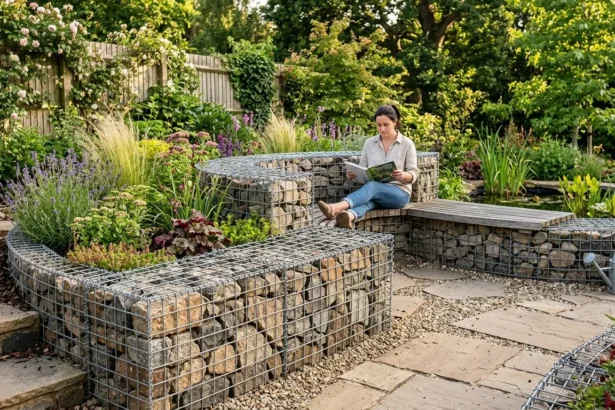
Low borders, landscape dividers, and similar features may have a simpler scope. Their cost is often driven by basket selection, stone appearance, preparation, and access.
Even so, a freestanding wall needs an appropriate arrangement and stable support. Don’t assume that being decorative removes the need to consider stability.
Gabion Retaining Walls
A retaining wall must be planned around the ground it supports.
Soil conditions, slope, water, and nearby loads can affect the design. A driveway, building, or steep bank near the wall may change what is required.
Budget for site-specific advice where needed, plus any specified drainage, filter materials, and backfill. Check local permit and engineering requirements before purchasing materials.
Water passing through the stone doesn’t remove the need to consider drainage behind the structure.
Is Building a Gabion Wall Yourself Cheaper?
DIY installation can reduce paid labor costs, but the materials still need to be delivered and moved into place.
You may also need tools, lifting or handling equipment, and help with filling. A small accessible garden feature is a more manageable starting point than a large retaining project.
Before choosing DIY, consider:
- How much stone you will need to move.
- Whether delivery can reach the work area.
- Whether you can prepare and level the base properly.
- How much time the visible stone arrangement will take.
- Whether the project requires professional design or installation.
Price both options with the same materials and scope. Otherwise, a DIY estimate may look cheaper simply because it omits work included in the contractor’s quote.
Practical Ways to Reduce Gabion Wall Cost
The best savings usually come from simpler planning and easier handling.
Ask About Standard Basket Sizes
Check available basket dimensions before fixing the final layout. A small adjustment to a decorative project may avoid a custom order.
For retaining work, discuss any proposed change with the person responsible for the design.
Compare Local Stone Options
Ask nearby suppliers for suitable fill and delivered pricing.
An attractive local stone may cost less overall than a specialty material transported from farther away. Compare samples as well as prices so the saving doesn’t leave you disappointed with the finished wall.
Keep the Layout Simple
Straight runs are generally easier to measure and organize than a design with numerous corners, changes in height, or custom sections.
Choose details that improve the space rather than adding complexity for its own sake.
Plan the Delivery Point
Arrange unloading as close to the work area as practical. Confirm that the delivery vehicle and unloading method suit the available access.
Solving this before delivery can prevent a large amount of extra handling.
Specify Where Appearance Matters Most
Tell the installer which faces will be visible. A wall seen from both sides needs a different finish allowance from one with a single exposed face.
Any variation in fill or placement must remain suitable for the basket system and wall design.
How to Compare Gabion Wall Quotes
Send the same project information to each supplier or contractor:
- Wall length and proposed height.
- Whether it is decorative, freestanding, or retaining soil.
- Proposed depth or an existing design.
- Site photographs and access details.
- Preferred stone appearance.
- Delivery location.
- Whether you want materials only or complete installation.
Then ask each contractor to identify exclusions.
Check excavation, spoil disposal, base preparation, delivery, unloading, filling, drainage, cleanup, and taxes. Confirm who handles permits or design work if those are required.
For retained soil, compare quotes against the same approved design. A cheaper price for a smaller structure is a different proposal.
Final Takeaway
A useful gabion wall budget includes the finished job, from the baskets and stone to delivery, preparation, and installation.
Start with the wall’s purpose and dimensions, calculate its volume, and request itemized quotes. That will give you a clearer picture of the cost than a basket price or a general rate per foot.