


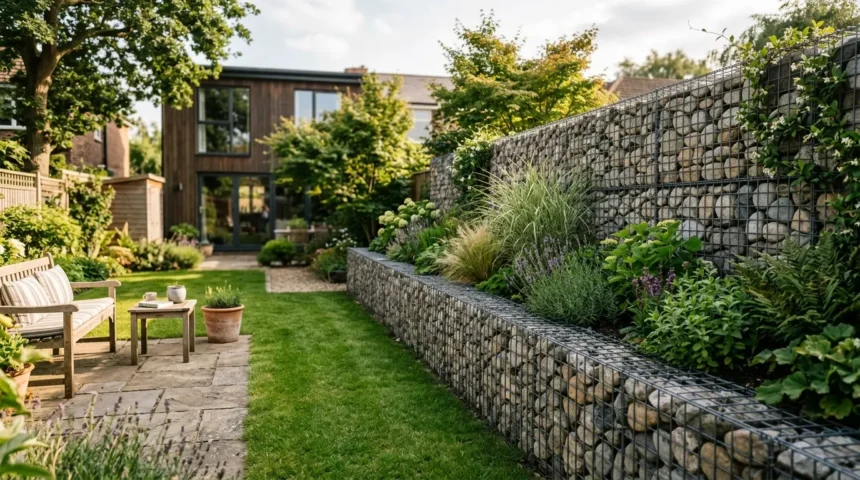
A backyard wall takes up valuable space, so it should earn its place in the garden. A gabion wall can provide a strong visual boundary while bringing the colour and texture of stone into the planting scheme. For a garden with room for its footprint, that combination makes it a compelling choice.
- What a gabion wall actually is
- The stone gives the garden something to work with
- It can define a space without enclosing the whole backyard
- Privacy works best when you target the actual view
- Planting helps the wall belong in the garden
- Drainage is a benefit, but water still needs a plan
- The basket specification deserves as much attention as the stone
- Gabion wall cost depends on more than the baskets
- When I would choose another material
- Three mistakes that can spoil the result
- Choosing the height before deciding the job
- Treating the visible face as the whole project
- Adding extras without checking their loads
- Why it remains a strong backyard choice
- Frequently Asked Questions
My preference comes down to its appearance and the ways it can fit into a garden design. Stone-filled baskets sit comfortably beside gravel paths, timber furniture and generous planting. They can define a patio, screen a particular view or form part of a professionally designed retaining structure.
The word “best” needs some context, though. A narrow courtyard, difficult delivery access or a need for a slim boundary may favour another material. The useful question is whether a gabion suits the job your wall needs to do.
What a gabion wall actually is
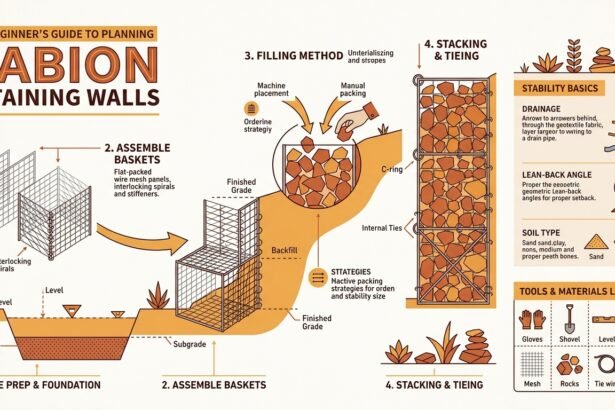
Gabions are wire mesh baskets filled with stone. The baskets contain the fill and give the finished feature its shape. Depending on the system, their panels may use welded mesh or woven wire.
The construction looks straightforward, but the wall’s purpose changes its requirements.
| Wall type | Main purpose | What needs attention |
|---|---|---|
| Decorative garden feature | Creates a visual accent or divides an area | Stable support, basket specification and safe positioning |
| Freestanding wall | Forms a boundary or privacy screen without holding back soil | Stability, height, exposure and any required supports |
| Retaining wall | Holds back soil where ground levels differ | Soil pressure, ground conditions, drainage and structural design |
A decorative basket should not be assumed suitable for either of the other jobs. If the project carries loads, retains soil or could affect a neighbouring property, have its design assessed by a qualified local professional.
The stone gives the garden something to work with
The strongest reason to choose a backyard gabion wall is its visible material. You see individual stones, small variations in colour and the shadows between them. That texture gives planting a substantial backdrop.
Stone choice also changes the mood of the garden. Pale fill can support a light, restrained palette. Darker stone creates a more pronounced boundary. Mixed tones can connect the wall with existing paving or gravel, provided the combination looks intentional.
I would start with the surfaces already in the garden. Place stone samples beside the patio, house brickwork and path material before choosing. Look at them dry and wet: a stone that seems subtle on a supplier’s display may become much darker after rain.
For a quieter gabion wall design, keep the fill consistent and let the plants introduce variety. In a small garden, several competing stone colours can make a large wall feel unnecessarily busy.
It can define a space without enclosing the whole backyard
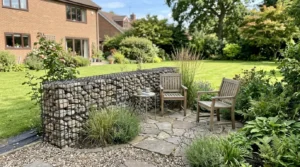
Some of the most useful gabion wall ideas involve a short section rather than a complete boundary.
A wall behind a dining area can give the furniture a clear setting. A section beside a path can mark the change from patio to planting. Near a garden entrance, a stone-filled feature can create a focal point without making every edge of the garden equally heavy.
This is where restraint helps. Repeating gabions around the entire backyard may reduce the space available for beds, circulation and furniture. One well-positioned gabion garden wall can give the design enough structure.
Before settling on its location, mark out the proposed footprint on the ground. Include the wall’s full depth, rather than drawing a single line. Then walk past it, pull out a dining chair and check whether a wheelbarrow can still reach the beds.
Those ordinary movements will tell you more than a photograph of someone else’s garden.
Privacy works best when you target the actual view
A gabion privacy wall can screen a seating area, but its usefulness depends on where the overlooking happens.
If the problem is a direct view from a neighbouring patio, a carefully positioned section may be enough. If an upstairs window overlooks the garden, a boundary wall may leave much of that view unchanged.
Check the sightline from the place you want to use. Sit where the bench or dining table will go and identify the specific area that needs screening. This helps avoid building a larger wall than the garden needs.
The stone arrangement affects the visual screening, too. Gaps remain between pieces of fill, so assess the likely finish rather than assuming every basket will behave like a solid panel.
A freestanding privacy wall still needs an appropriate design. Do not copy the proportions of a low decorative feature and simply make it taller. Confirm its support requirements and check local boundary and planning rules before ordering materials.
Planting helps the wall belong in the garden
Gabions have a strong geometric shape. Planting beside them provides a softer edge and stops the stone from dominating the view.
A border in front can work particularly well. Choose plants for the available light, soil and mature size, then leave enough room for them to grow without blocking a path. Grasses, flowering perennials and small shrubs offer different effects; the right combination depends on the garden rather than the wall alone.
For a restrained scheme, repeat a few plants along the wall. For a looser garden, vary the planting while keeping some clear views of the stone.
I would generally keep soil in a separate bed or purpose-designed planting compartment. An ordinary stone-filled basket is not automatically a suitable planter. Mixing soil into the fill changes the feature and creates questions about containment, water movement and access for maintenance.
Climbers need similar thought. Give them suitable support and consider how you will inspect the mesh once the plants mature.
Drainage is a benefit, but water still needs a plan
The spaces between stones allow water to move through gabion fill. That is a useful characteristic, especially in retaining applications, but it does not remove the need to design for water.
Retaining wall drainage must account for water arriving from the ground behind the wall and from the surrounding site. Soil also needs to be kept from washing into the stone fill. A suitable filter or separator may form part of that design, alongside drainage and an appropriate discharge route.
Gabion construction guidance from Ultimate One treats drainage and separation from retained soil as essential design considerations. Its construction examples should not be treated as a universal specification for a backyard.
For your own project, establish where water collects and where it can safely go. A wall should not redirect runoff towards the house, a neighbouring garden or a vulnerable slope.
This distinction matters: a material that lets water through can still be part of a poorly drained site.
The basket specification deserves as much attention as the stone
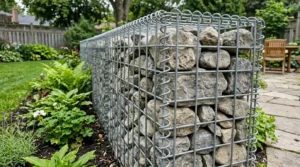
The finished wall draws attention to its fill, but the mesh, connections and internal bracing also matter.
Bracing means ties or components that help maintain the basket’s shape during filling. Missing or incorrectly fitted braces can contribute to bulging. Uneven filling and large unintended cavities can also spoil the face and affect the installation. Follow the instructions for the specified basket system rather than borrowing details from a different product.
Ask the supplier for clear information about:
- The intended use of the baskets.
- The mesh openings and compatible stone grading.
- The wire coating and suitability for the exposure conditions.
- The required connectors, braces and assembly method.
Stone grading means the range of stone sizes supplied. Fill needs to suit the mesh openings so that pieces are retained securely, while meeting the project’s material specification.
Do not assume that leftover rubble or any attractive garden stone will be suitable. Appearance is one part of the choice; the fill also needs to perform its intended job.
The wall’s durability depends on the materials and exposure conditions. A single lifespan claim is therefore a poor basis for comparing every gabion system. Technical certification for gabion products identifies mesh quality, stone durability and exposure among the factors affecting service life.
Gabion wall cost depends on more than the baskets
A basket price can make the project look simple to budget. The complete cost includes much more.
Stone supply and delivery, access, ground preparation, filling labour and any drainage or support work can all change the total. A retaining structure may also require professional design and additional site work.
Access deserves an early check. A driveway delivery is convenient only if the material can then reach the wall location. Moving stone through a narrow side passage or across a finished garden can add substantial work.
Ask for quotes covering the same scope. A supply-only price should not be compared with a finished wall that includes preparation, installation and cleanup.
I would be cautious about calling gabions the cheapest backyard option. Their value is easier to judge once you know the installed cost and compare it with alternatives that meet the same purpose.
When I would choose another material
Gabion wall benefits are most persuasive when the garden has enough space and the stone finish suits the surroundings. There are situations where I would look elsewhere.
A tight passage or small courtyard: The required footprint may take too much usable space. A suitable fence or another designed boundary could fit more comfortably.
A garden needing a smooth finish: Visible mesh and irregular stone are central to the look. They will not satisfy someone who wants a crisp rendered surface.
A difficult material route: Restricted access can make stone delivery and filling less practical than the initial design suggests.
A project needing a quick, easily altered divider: A substantial filled feature is a bigger commitment than a movable screen or lightweight partition.
These are useful reasons to reconsider before buying. A good backyard choice should suit the site as well as the photograph that inspired it.
Three mistakes that can spoil the result
Choosing the height before deciding the job
Start with what the wall must achieve: define a bed, screen a seat or retain a change in ground level. Its dimensions and construction should follow that purpose.
Treating the visible face as the whole project
The supporting ground, connections, fill and water management may be less noticeable, but they affect how the feature performs. A neat front does not establish that the wall is properly designed.
Adding extras without checking their loads
A timber seat, screen or pergola connection can change what the gabion must support. Plan those additions from the beginning and have load-bearing details assessed. They should not be improvised after the baskets are filled.
Why it remains a strong backyard choice
I think a gabion wall works best when it has one clear role and uses stone that belongs with the rest of the garden. A short patio backdrop, a carefully placed screen or an appropriately designed retaining wall can bring useful structure and a distinctive finish.
Before committing, mark out its footprint, check the material route and decide exactly what it needs to do. Then choose the basket system and stone around those requirements.
That is what makes gabions appealing: the chance to create a garden feature whose practical purpose and appearance support each other.
Frequently Asked Questions
Can a gabion wall be moved later?
It can be dismantled, but moving a filled wall is a substantial job. The stone usually needs to be removed before the baskets can be relocated. Choose its position with future garden changes in mind.
Does a gabion wall need maintenance?
It needs periodic inspection. Look for damaged mesh, loose connections, escaping stones or changes in the wall’s shape. Movement, leaning or noticeable bulging should be assessed by a qualified professional, particularly where the wall retains soil.
Can I attach lights to a gabion wall?
Lighting can be included in the design. Use fittings suitable for outdoor conditions and plan their mounting, wiring and maintenance access before filling the baskets. Electrical work must meet the requirements that apply locally.
Will weeds grow between the stones?
They can. Windblown seeds may settle in debris that collects between the stones. Remove unwanted growth while it is small, and keep fallen leaves from accumulating where practical.
Can I use gabions beside an existing fence?
Possibly, but the gabion needs its own suitable support and must not rely on the fence for stability. Allow access for fence repairs, confirm the boundary position and have the arrangement assessed if it could affect neighbouring land or structures.