



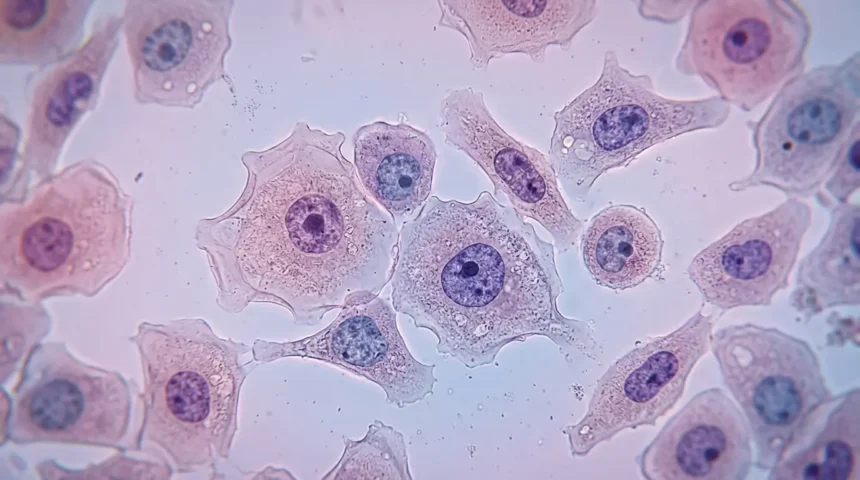
Every living thing depends on cells. They help the body turn food into energy, repair damaged tissue, and replace old cells that can no longer do their jobs. Plants rely on them to grow, bacteria use them to survive, and the human body contains an enormous variety of specialized cells that work together to keep essential processes running.
This is the basic idea behind cell biology, the scientific study of how cells are built, how they function, and how they grow. The term Cellulogia has appeared in online articles describing cellular science, but it is not a standard scientific name for an established branch of biology. If you are exploring the subject, understanding how real cells work is the best place to begin.
What Is Cellulogia?
Cellulogia is a term used in some online publications to discuss cells, their behavior, and their role in living organisms. However, the recognized scientific field covering these subjects is called cell biology, also known as cellular biology. Cytology is another related term, traditionally referring to the study of cells.
The distinction matters because an unfamiliar term can sound like an established scientific discipline without actually being one.
Cell biology examines how cells obtain energy, produce proteins, maintain their internal structures, respond to their surroundings, and reproduce. Researchers study these processes to understand everything from normal body development to infections and diseases.
For beginners, the central idea is simple: cells are the smallest living units capable of carrying out the essential processes of life. They are not just tiny pieces of a larger organism. Each cell has structures and systems that allow it to perform specific tasks.
Why Are Cells Important?
Think about what happens when you scrape your knee. The damaged area begins a healing process involving blood clotting, immune responses, and the activity of cells that help repair the tissue. You do not have to consciously control these processes because your body coordinates them automatically.
Cells are involved in much more than healing. They help transport oxygen, transmit electrical signals, contract muscles, digest nutrients, and protect the body against harmful microorganisms.
Different organisms depend on cells in different ways. A single-celled bacterium carries out all the functions it needs to survive within one cell. Humans, by contrast, rely on many specialized cell types that cooperate to form tissues and organs.
Without this organization, complex life would not be possible.
The Main Parts of a Cell
Although cells vary considerably in shape and function, many share several basic structures. Understanding these parts makes it easier to see how a cell stays alive and performs its work.
Cell membrane
The cell membrane forms the boundary between the cell and its surroundings. It helps control which substances enter and leave, allowing the cell to take in useful materials while managing waste.
The membrane also contains proteins that receive signals and help cells communicate with their environment.
Cytoplasm
Cytoplasm is the material inside the cell membrane, including the fluid called cytosol and the structures suspended within it. Many important chemical reactions take place in this environment.
Rather than acting as an empty container, the cytoplasm provides the setting for much of the cell’s daily activity.
Nucleus
In most plant and animal cells, the nucleus stores most of the cell’s DNA. This genetic material contains instructions used to build proteins and regulate many cellular activities.
Not every cell has a nucleus. Bacteria, for example, store their DNA in a region of the cell that is not enclosed by a nuclear membrane.
Mitochondria
Mitochondria help convert energy from nutrients into a form the cell can use. This energy supports processes such as movement, growth, and the production of essential molecules.
Some cells contain many mitochondria because their work requires substantial energy. Others have different energy needs and structures.
Ribosomes
Ribosomes build proteins by following instructions carried by messenger RNA. These proteins help form cellular structures, speed up chemical reactions, transport substances, and carry out many other essential functions.
Each part has a distinct role, but none works entirely alone. A cell survives because its internal systems operate together.
How Do Cells Function?
A living cell is constantly carrying out chemical reactions. It takes in materials, uses energy, makes molecules, removes waste, and responds to signals. These activities must remain coordinated for the cell to function properly.
One important process is metabolism, the collection of chemical reactions that allows cells to obtain energy and build or break down substances.
For example, cells use nutrients to produce energy-rich molecules called ATP. They then use that energy to power activities such as moving materials across membranes, building proteins, and maintaining internal conditions.
Cells also communicate. Chemical signals can tell a cell to grow, change its activity, divide, or begin a particular response. In the human body, this communication helps coordinate processes such as digestion, immune defense, and tissue repair.
When these systems work properly, cells can perform their specialized roles. When important processes are disrupted, the effects may extend beyond an individual cell and affect the surrounding tissue or the entire organism.
How Do Cells Grow?
Cell growth means an increase in the size or mass of an individual cell. It involves making more proteins, membranes, and other materials needed to maintain and expand its internal structures.
Growth requires raw materials and energy. Cells obtain these from their surroundings and use them to produce the components they need.
However, a bigger cell is not always a better-functioning cell. As a cell grows, it becomes harder to move enough nutrients in and waste products out relative to its increasing volume. This is one reason cell size is regulated.
Growth also differs from cell division. A cell can increase in size without dividing immediately, while some cells divide under particular conditions without a large increase in size beforehand.
In a growing child, increases in body size generally involve both cell growth and an increase in cell number, although the balance differs among tissues. In adults, cell growth and replacement continue to support normal maintenance and repair.
How Do Cells Divide?
Cell division allows organisms to grow, replace damaged cells, and maintain tissues. It also enables single-celled organisms to reproduce.
In many human cells, division occurs through a process called mitosis. Before dividing, a cell copies its DNA so that each new cell can receive the genetic information it needs.
The chromosomes are then separated, and the cell divides into two daughter cells. Under the right conditions, these new cells can continue functioning, grow, or divide again.
This process is tightly regulated. Not every cell divides at the same rate. Some cells, such as many cells in the intestinal lining, are regularly replaced. Mature nerve cells in the brain generally divide very little or not at all under normal conditions.
The body also uses signals to regulate division. When this control breaks down, cells may multiply abnormally. Uncontrolled cell growth and division are important features of cancer, although cancer develops through a more complex series of biological changes than cell division alone.
Different Types of Cells
Cells have different structures because they perform different jobs. Their shapes, internal components, and activities reflect the needs of the organism.
Animal cells include muscle cells, nerve cells, red blood cells, and skin cells. Muscle cells are adapted for contraction, while nerve cells transmit information through electrical and chemical signals. Mature human red blood cells lack a nucleus and are specialized for transporting oxygen.
Plant cells share several features with animal cells but also have a cell wall, which provides structural support. Most plant cells involved in photosynthesis contain chloroplasts, where light energy is used to help produce sugars.
Bacterial cells are generally simpler in internal organization. They do not have a membrane-bound nucleus, but they still carry out the chemical reactions and other processes needed to live and reproduce.
These differences show why cells cannot all be understood through one simple description. Their shared features explain what makes them living systems, while their specialized structures explain how they carry out different tasks.
What Helps Cells Stay Healthy?
Cells need suitable conditions to maintain their normal functions. They depend on a steady supply of nutrients, adequate oxygen for many energy-producing processes, and the ability to remove waste.
At the level of the whole body, everyday habits help support these needs. Eating a varied, balanced diet provides nutrients used in cellular processes. Physical activity supports the function of muscles and other body systems, while adequate sleep helps maintain normal physiological regulation.
Cells also have internal systems for repairing certain types of damage, recycling worn-out components, and responding to stress. These mechanisms are important, but they are not perfect. Aging, environmental exposures, inherited factors, and disease can affect how well cells function over time.
It is also worth being cautious about products that claim to regenerate cells, reverse aging at the cellular level, or repair all cellular damage. Such claims require evidence about the specific product or treatment, not simply an explanation of how cells work.
How Scientists Study Cells
Scientists use several methods to investigate cell structure and behavior. Microscopes allow them to examine cells that are too small to see clearly with the naked eye. Different imaging techniques reveal structures ranging from overall cell shape to details inside individual cells.
Researchers also use cell cultures to observe how cells behave under controlled conditions. Genetic techniques help them investigate how particular genes influence cellular activity, while biochemical tests can reveal how cells produce energy or build proteins.
These methods have practical applications. Cell research helps scientists understand infections, investigate inherited conditions, develop medicines, and explore how tissues respond to injury.
Much of this work takes place in laboratories, but its findings influence medical care and biological knowledge in everyday life.
Final Thoughts
Cellulogia may appear in online discussions about cellular science, but cell biology is the established field that explains how cells function, grow, and divide. Learning the difference helps separate an unfamiliar label from the scientific knowledge behind it.
Cells may be microscopic, yet their activities support nearly every process associated with life. From producing energy to repairing tissue and transmitting information, they perform an extraordinary range of tasks. Understanding these processes offers a useful foundation for exploring human biology, plant growth, genetics, and modern medical research.
FAQs
What does Cellulogia mean?
Cellulogia is a term used in some online content about cells and cellular processes. It is not a standard scientific name for an established biological discipline. Cell biology is the recognized field that studies how cells function and grow.
How do cells grow?
Cells grow by producing proteins, membranes, and other materials. They use nutrients and energy to increase their size and maintain their internal structures.
What is the difference between cell growth and cell division?
Cell growth increases the size or mass of an individual cell. Cell division produces new cells. Both processes can contribute to the growth and maintenance of an organism.
Why do cells need energy?
Cells use energy to build molecules, transport substances, communicate, move when necessary, and maintain the conditions required for life.
Can all cells divide?
No. Some cells divide regularly, while others divide only under certain conditions. Many mature human nerve cells, for example, have very limited capacity for division.